Best Horror Movies on All Time
25.Best Horror Movies on All Time SuperHit Right Now.
In terms of comparing the major streaming services, it’s easy to think of Hulu as “the TV-focused one,” but that’s not entirely fair—the service also has a healthy number of movies at any given time, although its overall library is nowhere near the size of Netflix’s or (especially) Amazon Prime’s. Still, horror geeks who happen to have a Hulu subscription actually have access to a pretty decent library of quality films.
Kudos to Hulu for actually creating a horror-specific genre subcategory since the last time we compiled this list, when they confusingly had “horror and suspense” jumbled together into one category that contained the likes of both The Babadook and Snowden. Now at least everything you see when you visit the “horror” tab makes sense being there. They’ve also added a considerable number of worthwhile titles to the library since last we checked, drawing into a dead heat with Netflix. Unfortunately, as we head into the end of 2019, Hulu has lost some classic titles they had access to as recently as last month, including An American Werewolf in London, Let the
In terms of comparing the major streaming services, it’s easy to think of Hulu as “the TV-focused one,” but that’s not entirely fair—the service also has a healthy number of movies at any given time, although its overall library is nowhere near the size of Netflix’s or (especially) Amazon Prime’s. Still, horror geeks who happen to have a Hulu subscription actually have access to a pretty decent library of quality films.
Kudos to Hulu for actually creating a horror-specific genre subcategory since the last time we compiled this list, when they confusingly had “horror and suspense” jumbled together into one category that contained the likes of both The Babadook and Snowden. Now at least everything you see when you visit the “horror” tab makes sense being there. They’ve also added a considerable number of worthwhile titles to the library since last we checked, drawing into a dead heat with Netflix. Unfortunately, as we head into the end of 2019, Hulu has lost some classic titles they had access to as recently as last month, including An American Werewolf in London, Let the
25. Blade 2
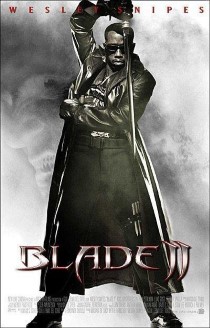
Year: 2002
Director: Guillermo Del Toro
Leave it to gothic horror extraordinaire Guillermo del Toro to take our unstoppable vampire hunter and crank the style past 11 as he plays up the comic book craziness to the tilt. Arguably even more enjoyable than its predecessor, Blade II sees a fragile alliance between Blade (Wesley Snipes) and the Bloodpack—basically, the Dirty Dozen of vampires—as they face off against Reapers (super-vampires who enjoy them some tasty vampire blood). Not only are there great new characters in the ’pack, but as this is a del Toro joint, there’s 100% more Ron Perlman. Fang-tastic. —Scott Wold
Year: 2002
Director: Guillermo Del Toro
Leave it to gothic horror extraordinaire Guillermo del Toro to take our unstoppable vampire hunter and crank the style past 11 as he plays up the comic book craziness to the tilt. Arguably even more enjoyable than its predecessor, Blade II sees a fragile alliance between Blade (Wesley Snipes) and the Bloodpack—basically, the Dirty Dozen of vampires—as they face off against Reapers (super-vampires who enjoy them some tasty vampire blood). Not only are there great new characters in the ’pack, but as this is a del Toro joint, there’s 100% more Ron Perlman. Fang-tastic. —Scott Wold
24. We Are What We Are
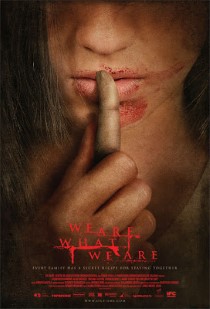
Year: 2010
Director: Jorge Michel Grau
This 2010 Mexican horror thriller was remade in the U.S. in 2013 by the talented Jim Mickle—and I have to admit, the American remake is the stronger of the two stories. Still, the original We Are What We Are sows the seeds of a compelling film. It follows a close-knit family of cannibals secretly maintaining their way of life in an urban setting. When the patriarch of the family drops dead, presumably from the cannibalism-related disease kuru, the family unit is thrown into disorder and the two teenage sons suddenly inherit the responsibility of obtaining fresh meat for the family’s ritualized cannibalism. What follows is a somewhat awkward, very dour and morbid series of misadventures as they try to maintain their way of life. The film is both creepy and gory, but it lacks the strength of characters and relationships that are established in the American version, which delves deeper into the psyche of each family member. You can see why Mickle took an interest in the premise, though. — Jim Vorel
Year: 2010
Director: Jorge Michel Grau
This 2010 Mexican horror thriller was remade in the U.S. in 2013 by the talented Jim Mickle—and I have to admit, the American remake is the stronger of the two stories. Still, the original We Are What We Are sows the seeds of a compelling film. It follows a close-knit family of cannibals secretly maintaining their way of life in an urban setting. When the patriarch of the family drops dead, presumably from the cannibalism-related disease kuru, the family unit is thrown into disorder and the two teenage sons suddenly inherit the responsibility of obtaining fresh meat for the family’s ritualized cannibalism. What follows is a somewhat awkward, very dour and morbid series of misadventures as they try to maintain their way of life. The film is both creepy and gory, but it lacks the strength of characters and relationships that are established in the American version, which delves deeper into the psyche of each family member. You can see why Mickle took an interest in the premise, though. — Jim Vorel
23. Antiviral
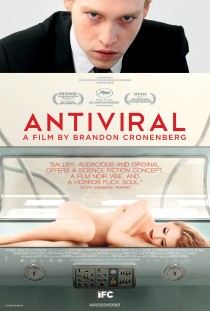
Year: 2012
Director: Brandon Cronenberg
When you’re the son of David Cronenberg, you have a lot to live up to in a horror film debut, and Brandon Cronenberg does an admirable job in his cerebral and icky horror flick Antiviral. Although it can be a little slow and portentous, the setting and ideas are spectacular. The film imagines a near-future, sci-fi tinged world where obsession with celebrity lives has replaced nearly every other facet of the arts. People are so celebrity-obsessed, in fact, that a booming genetics business has developed to cater to disease hounds—people who literally want to be injected with specific strains of diseases, such as STDs, that have been harvested from various starlets. Elsewhere, people stand in line at meat markets to buy muscle tissue grown and cultivated from celebrity donors. Cronenberg may lay the social commentary on a little thick, but the results on screen are chilling. If the characters were a little bit more vivacious and interesting to follow, Antiviral could have been a modern classic, but it’s still an impressive debut for the younger Cronenberg. — Jim Vorel
Year: 2012
Director: Brandon Cronenberg
When you’re the son of David Cronenberg, you have a lot to live up to in a horror film debut, and Brandon Cronenberg does an admirable job in his cerebral and icky horror flick Antiviral. Although it can be a little slow and portentous, the setting and ideas are spectacular. The film imagines a near-future, sci-fi tinged world where obsession with celebrity lives has replaced nearly every other facet of the arts. People are so celebrity-obsessed, in fact, that a booming genetics business has developed to cater to disease hounds—people who literally want to be injected with specific strains of diseases, such as STDs, that have been harvested from various starlets. Elsewhere, people stand in line at meat markets to buy muscle tissue grown and cultivated from celebrity donors. Cronenberg may lay the social commentary on a little thick, but the results on screen are chilling. If the characters were a little bit more vivacious and interesting to follow, Antiviral could have been a modern classic, but it’s still an impressive debut for the younger Cronenberg. — Jim Vorel
22. Child’s Play
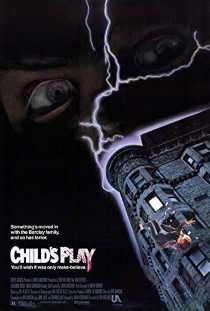
Year: 1988
Director: Tom Holland
Child’s Play is one of those late ’80s gimmick slashers where it’s all too easy to feel as if you’ve already seen the film, without actually having sat down to watch it. Killer doll, very cheesy, plenty of one-liners, right? Well yes, and no. The original (and pretty obviously best) entry in the Child’s Play series is the most serious-minded (at least slightly) and grounded of the movies, and it goes out of its way to humanize its iconic killer Chucky—or the spirit within him, that of serial killer Charles Lee Ray—more than one might expect. If you’ve never seen a film in the series, ask yourself this: Did you know that the plot of Child’s Play is technically all about voodoo? Because it is. In the end, though, its greatness and inherent watchability boils down to the charms of the wonderful Brad Dourif, who found in Chucky the vessel he needed to become a genre legend forevermore. Like Robert Englund did with Freddy Krueger, Chucky becomes the most beloved aspect of the series because Dourif’s voiceover just oozes charisma and character—he’s more alive than any of the flesh-and-blood characters in this series could ever be. It’s just one of those sublime moments of perfect casting—it’s easy to imagine that no one would remember the Child’s Play series today if that one aspect had been different. —Jim Vorel
Year: 1988
Director: Tom Holland
Child’s Play is one of those late ’80s gimmick slashers where it’s all too easy to feel as if you’ve already seen the film, without actually having sat down to watch it. Killer doll, very cheesy, plenty of one-liners, right? Well yes, and no. The original (and pretty obviously best) entry in the Child’s Play series is the most serious-minded (at least slightly) and grounded of the movies, and it goes out of its way to humanize its iconic killer Chucky—or the spirit within him, that of serial killer Charles Lee Ray—more than one might expect. If you’ve never seen a film in the series, ask yourself this: Did you know that the plot of Child’s Play is technically all about voodoo? Because it is. In the end, though, its greatness and inherent watchability boils down to the charms of the wonderful Brad Dourif, who found in Chucky the vessel he needed to become a genre legend forevermore. Like Robert Englund did with Freddy Krueger, Chucky becomes the most beloved aspect of the series because Dourif’s voiceover just oozes charisma and character—he’s more alive than any of the flesh-and-blood characters in this series could ever be. It’s just one of those sublime moments of perfect casting—it’s easy to imagine that no one would remember the Child’s Play series today if that one aspect had been different. —Jim Vorel
21. Grabbers
Year: 2012
Director: Jon Wright
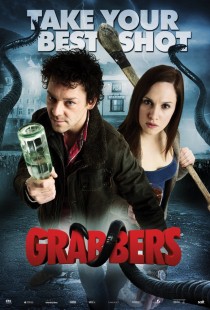
A surprisingly well-acted Irish/British indie sci-fi horror flick, Grabbers is unabashedly goofy but wholly professional and charming in spades. The story follows an alcoholic police officer who has to face a new threat to a sleepy seaside community when octopus-like aliens begin emerging from the sea and killing townspeople. These “Grabbers,” as they’re quickly dubbed, have only one weakness: Human blood is fatal to them if it’s over a certain percentage alcohol. Therefore, to combat the monsters and make themselves unpalatable, the police and townspeople have an obvious choice to make: Get totally hammered and grab a bunch of weapons. That may sound rather close to the summary of a direct-to-video movie by The Asylum, but Grabbers is surprisingly intelligent, witty and well-written in such a way that it easily escapes a fate in DVD bargain bin hell. —Jim Vorel
Year: 2012
Director: Jon Wright
A surprisingly well-acted Irish/British indie sci-fi horror flick, Grabbers is unabashedly goofy but wholly professional and charming in spades. The story follows an alcoholic police officer who has to face a new threat to a sleepy seaside community when octopus-like aliens begin emerging from the sea and killing townspeople. These “Grabbers,” as they’re quickly dubbed, have only one weakness: Human blood is fatal to them if it’s over a certain percentage alcohol. Therefore, to combat the monsters and make themselves unpalatable, the police and townspeople have an obvious choice to make: Get totally hammered and grab a bunch of weapons. That may sound rather close to the summary of a direct-to-video movie by The Asylum, but Grabbers is surprisingly intelligent, witty and well-written in such a way that it easily escapes a fate in DVD bargain bin hell. —Jim Vorel
20. My Bloody Valentine
Year: 1981
Director: George Mihalka
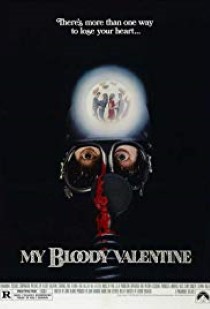
Practically every holiday of note got their own quasi-slasher film in the wake of Friday the 13th, but it’s the Valentine’s Day entry that stole our hearts. This film is the archetype for just about every early ’80s slasher from top to bottom: “Anniversary of the day it all happened” setting, wronged antagonist returning decades later, masked killer, horny teens, and red herrings aplenty. It was infamous at the time for its gore, but audiences never knew the half of it in 1981—if you watch this film today, it’s imperative that you obtain the 2009 uncut version (not the 2009 remake), which adds back in a ton of footage from the gory death scenes, especially the bit in the showers when one particularly unfortunate girl gets her head impaled by a spout, which then gets turned on. Suffice to say, it’s not pretty. Beyond the gore, there’s something inherently likable about My Bloody Valentine’s particular brand of familiarity—it feels like the cinematic equivalent of a letter in the mail from an old friend. This is basically slasher comfort food—the good kind. —Jim Vorel
Year: 1981
Director: George Mihalka
Practically every holiday of note got their own quasi-slasher film in the wake of Friday the 13th, but it’s the Valentine’s Day entry that stole our hearts. This film is the archetype for just about every early ’80s slasher from top to bottom: “Anniversary of the day it all happened” setting, wronged antagonist returning decades later, masked killer, horny teens, and red herrings aplenty. It was infamous at the time for its gore, but audiences never knew the half of it in 1981—if you watch this film today, it’s imperative that you obtain the 2009 uncut version (not the 2009 remake), which adds back in a ton of footage from the gory death scenes, especially the bit in the showers when one particularly unfortunate girl gets her head impaled by a spout, which then gets turned on. Suffice to say, it’s not pretty. Beyond the gore, there’s something inherently likable about My Bloody Valentine’s particular brand of familiarity—it feels like the cinematic equivalent of a letter in the mail from an old friend. This is basically slasher comfort food—the good kind. —Jim Vorel
19. A Quiet Place
Year: 2018
Director: John Krasinski
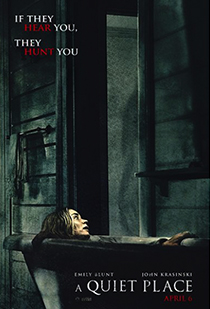
A Quiet Place’s narrative hook is a killer—ingenious, ruthless—and it holds you in its sway for the entirety of this 95-minute thriller. That hook is so clever that, although this is a horror movie, I sometimes laughed as much as I tensed up, just because I admired the sheer pleasure of its execution. The film is set not too far in the future, out somewhere in rural America. Krasinski plays Lee Abbott, a married father of two. (It used to be three.) A Quiet Place introduces its conceit with confidence, letting us piece together the terrible events that have occurred. At some point not too long ago, a vicious pack of aliens invaded Earth. The creatures are savagely violent but sightless, attacking their prey through their superior hearing. And so Lee and his family—including wife Evelyn (Emily Blunt) and children Regan (Millicent Simmonds) and Marcus (Noah Jupe)—have learned that, to stay alive, they must be completely silent. Speaking largely through sign language, which the family knew already because Regan is deaf, Lee and his clan have adapted to their bleak, terrifying new circumstance, always vigilant to ensure these menacing critters don’t carve them up into little pieces. As you might expect, A Quiet Place finds plenty of opportunities for the Abbotts to make sound—usually accidentally—and then gives the audience a series of shocks as the family tries to outsmart the aliens. As with a lot of post-apocalyptic dramas, Krasinski’s third film as a director derives plenty of jolts from the laying out of its unsettling reality. The introduction of needing to be silent, the discovery of what the aliens look like, and the presentation of the ecosystem that has developed since their arrival is all fascinating, but the risk with such films is that, eventually, we’ll grow accustomed to the conceit and get restless. Krasinski and his writers sidestep the problem not just by keeping A Quiet Place short but by concocting enough variations on "Seriously, don’t make a noise" that we stay sucked into the storytelling. Nothing in his previous work could prepare viewers for the precision of A Quiet Place’s horror. —Tim Grierson
Year: 2018
Director: John Krasinski
A Quiet Place’s narrative hook is a killer—ingenious, ruthless—and it holds you in its sway for the entirety of this 95-minute thriller. That hook is so clever that, although this is a horror movie, I sometimes laughed as much as I tensed up, just because I admired the sheer pleasure of its execution. The film is set not too far in the future, out somewhere in rural America. Krasinski plays Lee Abbott, a married father of two. (It used to be three.) A Quiet Place introduces its conceit with confidence, letting us piece together the terrible events that have occurred. At some point not too long ago, a vicious pack of aliens invaded Earth. The creatures are savagely violent but sightless, attacking their prey through their superior hearing. And so Lee and his family—including wife Evelyn (Emily Blunt) and children Regan (Millicent Simmonds) and Marcus (Noah Jupe)—have learned that, to stay alive, they must be completely silent. Speaking largely through sign language, which the family knew already because Regan is deaf, Lee and his clan have adapted to their bleak, terrifying new circumstance, always vigilant to ensure these menacing critters don’t carve them up into little pieces. As you might expect, A Quiet Place finds plenty of opportunities for the Abbotts to make sound—usually accidentally—and then gives the audience a series of shocks as the family tries to outsmart the aliens. As with a lot of post-apocalyptic dramas, Krasinski’s third film as a director derives plenty of jolts from the laying out of its unsettling reality. The introduction of needing to be silent, the discovery of what the aliens look like, and the presentation of the ecosystem that has developed since their arrival is all fascinating, but the risk with such films is that, eventually, we’ll grow accustomed to the conceit and get restless. Krasinski and his writers sidestep the problem not just by keeping A Quiet Place short but by concocting enough variations on "Seriously, don’t make a noise" that we stay sucked into the storytelling. Nothing in his previous work could prepare viewers for the precision of A Quiet Place’s horror. —Tim Grierson
18. Little Monsters
Year: 2019
Director: Abe Forsythe
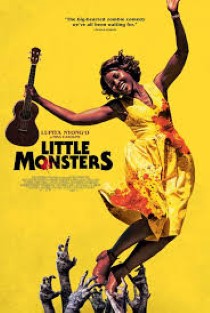
As Lupita Nyong’o was picking up her Academy Award for Best Supporting Actress in 2013, one probably wouldn’t have expected that she would be starring in not one but two different critically acclaimed horror films in 2019, but here we are. Most of the horror attention on Nyong’o this year was understandably derived from her scintillating turn in Jordan Peele’s Us, but Little Monsters feels as if it was sadly overlooked at the same time. This is a frequently uproarious zombie comedy, set in Australia, starring actor Alexander England as a slacker uncle to a precocious young child, and Nyong’o as the kid’s supremely dedicated and charming kindergarten teacher. And wouldn’t you know it—the class field trip to the farm/petting zoo just happens to be interrupted by a massive outbreak of the undead, leaving Nyong’o to shepherd her little flock to safety, all while concealing from them the seriousness of these events. Suffice to say, she pulls off a performing that is both touching and generates the occasional belly laugh, while also showing off such a consistent talent for musical performance that you can’t help but wonder if the film was calculated as the launching point for yet another side career. Josh Gad also shows up as a children’s entertainer character that takes full advantage of his irritating talents, but the film really belongs to Nyong’o. —Jim Vorel
Year: 2019
Director: Abe Forsythe
As Lupita Nyong’o was picking up her Academy Award for Best Supporting Actress in 2013, one probably wouldn’t have expected that she would be starring in not one but two different critically acclaimed horror films in 2019, but here we are. Most of the horror attention on Nyong’o this year was understandably derived from her scintillating turn in Jordan Peele’s Us, but Little Monsters feels as if it was sadly overlooked at the same time. This is a frequently uproarious zombie comedy, set in Australia, starring actor Alexander England as a slacker uncle to a precocious young child, and Nyong’o as the kid’s supremely dedicated and charming kindergarten teacher. And wouldn’t you know it—the class field trip to the farm/petting zoo just happens to be interrupted by a massive outbreak of the undead, leaving Nyong’o to shepherd her little flock to safety, all while concealing from them the seriousness of these events. Suffice to say, she pulls off a performing that is both touching and generates the occasional belly laugh, while also showing off such a consistent talent for musical performance that you can’t help but wonder if the film was calculated as the launching point for yet another side career. Josh Gad also shows up as a children’s entertainer character that takes full advantage of his irritating talents, but the film really belongs to Nyong’o. —Jim Vorel
17. The Beyond

Year: 1981
Director: Lucio Fulci
It’s hard to describe Fulci’s The Beyond in absolutes. Some would contend that it isn’t a “zombie movie.” Which isn’t to say there aren’t any zombies in it, but it’s not a Romero-style zombie movie, as Fulci pulled off in Zombi 2. The Beyond is the middle entry in Fulci’s “Gates of Hell” trilogy, and takes place in and around a crumbling old hotel that just happens to have one of those gates to hell located in its cellar. When it opens, all hell starts to break loose in the building, in a film that combines a haunted house aesthetic with demonic possession, the living dead and ghostly apparitions. As with so many of the other films in this mold, it’s not always entirely clear what’s going on … and honestly, the plot is more or less irrelevant. You’re watching it to see zombies gouge the eyes out of unsuspecting innocents or watch heads being blown off, and there’s no shortage of either of those things. Thinking back to Lucio Fulci movies after the fact, you won’t remember any of the story structure. You’ll just remember the ultra gory highlights, splattering across the screen in a way that continues to influence filmmakers to this day. Modern horror films such as We Are Still Here show heavy inspiration from Fulci, and The Beyond in particular. It’s one of the most stylish of the Italian, zombie-featuring horror flicks.
Year: 1981
Director: Lucio Fulci
It’s hard to describe Fulci’s The Beyond in absolutes. Some would contend that it isn’t a “zombie movie.” Which isn’t to say there aren’t any zombies in it, but it’s not a Romero-style zombie movie, as Fulci pulled off in Zombi 2. The Beyond is the middle entry in Fulci’s “Gates of Hell” trilogy, and takes place in and around a crumbling old hotel that just happens to have one of those gates to hell located in its cellar. When it opens, all hell starts to break loose in the building, in a film that combines a haunted house aesthetic with demonic possession, the living dead and ghostly apparitions. As with so many of the other films in this mold, it’s not always entirely clear what’s going on … and honestly, the plot is more or less irrelevant. You’re watching it to see zombies gouge the eyes out of unsuspecting innocents or watch heads being blown off, and there’s no shortage of either of those things. Thinking back to Lucio Fulci movies after the fact, you won’t remember any of the story structure. You’ll just remember the ultra gory highlights, splattering across the screen in a way that continues to influence filmmakers to this day. Modern horror films such as We Are Still Here show heavy inspiration from Fulci, and The Beyond in particular. It’s one of the most stylish of the Italian, zombie-featuring horror flicks.
16. The Clovehitch Killer
Director: Duncan Skiles
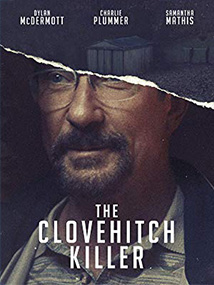
Life in small-town Christian America can have a stultifying effect on a person, sucking out all personality and vitality, replacing all individual identity with better living through dogma. In The Clovehitch Killer, director Duncan Skiles replicates this bait-and-switch through cinematographer Luke McCoubrey’s camera. The film is shot stock-still, the camera more or less fixed from one scene to the next, as if affected by the vibe of routine humming throughout its setting of Somewhere, Kentucky. Almost none of the characters we meet in the movie have a spark; they’re drones tasked with maintaining the hive’s integrity against interlopers who, god forbid, actually bother to be somebody. Caught up in this dynamic is Tyler (Charlie Plummer), awkward, quiet and shy, the son of Don (Dylan McDermott), a handyman and Scout troop leader, which brings no end of unexpressed consternation to Tyler as a Scout himself. On the surface, Don looks and acts like an automaton, too, with occasional hints of humor and warmth in his capacity as father and Scoutmaster. Beneath, though, he’s something more, at least so Tyler suspects: The Clovehitch Killer, a serial killer who once tormented their area with a horrific murder spree long completed. Or maybe not. Maybe Don just has a real kink fetish and keeps rope around for fun in the bedroom. Either way, fathers aren’t always who or what they appear.
Horror movies are all about the squirm, the nerve-wracking build-up of tension over time that, done properly, leaves viewers crawling out of their skin with dread. In The Clovehitch Killer, this sensation is wrought entirely through craft instead of effects. That damn camera, motionless and unstirred, is always happy to film what’s in front of it, never one to pan about to catch new angles. What you see is what it shows you, but what it shows you might be more awful than you can stomach at a glance. This is a devilish movie that does beautifully what horror films are meant to—vex us with fear—through the most deceptively simple of means. —Andy Crump
Director: Duncan Skiles
Life in small-town Christian America can have a stultifying effect on a person, sucking out all personality and vitality, replacing all individual identity with better living through dogma. In The Clovehitch Killer, director Duncan Skiles replicates this bait-and-switch through cinematographer Luke McCoubrey’s camera. The film is shot stock-still, the camera more or less fixed from one scene to the next, as if affected by the vibe of routine humming throughout its setting of Somewhere, Kentucky. Almost none of the characters we meet in the movie have a spark; they’re drones tasked with maintaining the hive’s integrity against interlopers who, god forbid, actually bother to be somebody. Caught up in this dynamic is Tyler (Charlie Plummer), awkward, quiet and shy, the son of Don (Dylan McDermott), a handyman and Scout troop leader, which brings no end of unexpressed consternation to Tyler as a Scout himself. On the surface, Don looks and acts like an automaton, too, with occasional hints of humor and warmth in his capacity as father and Scoutmaster. Beneath, though, he’s something more, at least so Tyler suspects: The Clovehitch Killer, a serial killer who once tormented their area with a horrific murder spree long completed. Or maybe not. Maybe Don just has a real kink fetish and keeps rope around for fun in the bedroom. Either way, fathers aren’t always who or what they appear.
Horror movies are all about the squirm, the nerve-wracking build-up of tension over time that, done properly, leaves viewers crawling out of their skin with dread. In The Clovehitch Killer, this sensation is wrought entirely through craft instead of effects. That damn camera, motionless and unstirred, is always happy to film what’s in front of it, never one to pan about to catch new angles. What you see is what it shows you, but what it shows you might be more awful than you can stomach at a glance. This is a devilish movie that does beautifully what horror films are meant to—vex us with fear—through the most deceptively simple of means. —Andy Crump
15. The Ring
Year: 2002
Director: Gore Verbinski
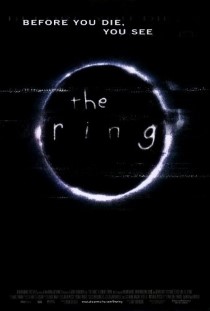
In the fall of 2002, Gore Verbinski’s The Ring was hailed as a revelation in American horror, and it really is a film that is both stylish and effective—particularly its opening establishment of the “cursed tape,” and the “I saw her face” cutaway, which had theater audiences jumping out of their seats. Naomi Watts provides one of the genre’s best central performances as investigative journalist Rachel Keller, who dives into the history of the tape while working against a ticking clock for herself and her son. With memorably creepy, darkly shaded, green-and-blue-tinged visuals, The Ring built an expressively creepy, morose visual identity, which would be lifted by many lesser, PG-13 horror films through the rest of the decade—as would the aesthetic of the ghost girl Samara, who memorably emerges from the TV screen in the film’s big conclusion. In the years that have followed, The Ring experienced a degree of critical blowback, as is common when a film can be described as the progenitor of a particular sub-genre style, but Verbinski’s remake deserved the attention it received in the U.S. —Jim Vorel
Year: 2002
Director: Gore Verbinski
In the fall of 2002, Gore Verbinski’s The Ring was hailed as a revelation in American horror, and it really is a film that is both stylish and effective—particularly its opening establishment of the “cursed tape,” and the “I saw her face” cutaway, which had theater audiences jumping out of their seats. Naomi Watts provides one of the genre’s best central performances as investigative journalist Rachel Keller, who dives into the history of the tape while working against a ticking clock for herself and her son. With memorably creepy, darkly shaded, green-and-blue-tinged visuals, The Ring built an expressively creepy, morose visual identity, which would be lifted by many lesser, PG-13 horror films through the rest of the decade—as would the aesthetic of the ghost girl Samara, who memorably emerges from the TV screen in the film’s big conclusion. In the years that have followed, The Ring experienced a degree of critical blowback, as is common when a film can be described as the progenitor of a particular sub-genre style, but Verbinski’s remake deserved the attention it received in the U.S. —Jim Vorel
14. Castle Rock
Year: 2018
Director: Various
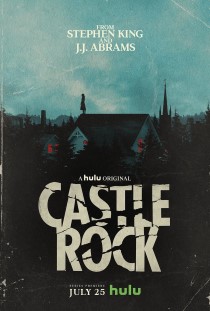
Castle Rock is easy to love if you’ve already given yourself up to Stephen King’s brand of campfire story, with all the hokey chuckles and midnight palm-sweating that comes with it. I know I have—I just finished enjoying King’s latest, The Outsider—which makes me a prime target (though, I suspect, not the only target) for Sam Shaw and Dustin Thomason’s Hulu original series, based on King’s mythos. Michael Uppendahl directs the solid pilot, which pushes artistry and literary fidelity into its compellingly sketched mystery, and the hooks only sink in deeper over the rest of season one. The plot and environment (because one is inevitably entangled with the other) use the stories of Stephen King as their knitting fiber, intertwining both meta- and textual characters and themes into the afflicted town of Castle Rock (home of Cujo and The Dead Zone). Along with It’s Derry and the oft-abbreviated Jerusalem’s Lot, Castle Rock makes up the Bermuda triangle of fictitious Maine haunts that King keeps coming back to. King’s work loves a polluted system, and towns work just as well as prisons or hotels. The atmosphere works because the series’ thematic and artistic construction do each other plenty of favors. For example, the show treats religion and the supernatural as forces that aren’t necessarily on equal footing, but are certainly enabling each other, like a father pushing his child higher and higher on the swing set. Which is which never stays the same. There’s misguided righteousness, dangerous excitement, and legitimate goodness caught up in the battle for Castle Rock’s soul, which is an exciting spin on the conventional Exorcist-like binary questioning of faith. —Jacob Oller
Year: 2018
Director: Various
Castle Rock is easy to love if you’ve already given yourself up to Stephen King’s brand of campfire story, with all the hokey chuckles and midnight palm-sweating that comes with it. I know I have—I just finished enjoying King’s latest, The Outsider—which makes me a prime target (though, I suspect, not the only target) for Sam Shaw and Dustin Thomason’s Hulu original series, based on King’s mythos. Michael Uppendahl directs the solid pilot, which pushes artistry and literary fidelity into its compellingly sketched mystery, and the hooks only sink in deeper over the rest of season one. The plot and environment (because one is inevitably entangled with the other) use the stories of Stephen King as their knitting fiber, intertwining both meta- and textual characters and themes into the afflicted town of Castle Rock (home of Cujo and The Dead Zone). Along with It’s Derry and the oft-abbreviated Jerusalem’s Lot, Castle Rock makes up the Bermuda triangle of fictitious Maine haunts that King keeps coming back to. King’s work loves a polluted system, and towns work just as well as prisons or hotels. The atmosphere works because the series’ thematic and artistic construction do each other plenty of favors. For example, the show treats religion and the supernatural as forces that aren’t necessarily on equal footing, but are certainly enabling each other, like a father pushing his child higher and higher on the swing set. Which is which never stays the same. There’s misguided righteousness, dangerous excitement, and legitimate goodness caught up in the battle for Castle Rock’s soul, which is an exciting spin on the conventional Exorcist-like binary questioning of faith. —Jacob Oller
13. The Monster Squad
Year: 1987
Director: Fred Dekker
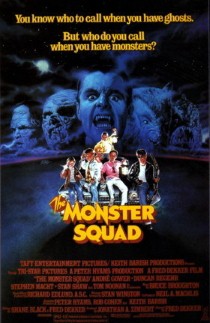
There’s really only one word for The Monster Squad: “Fun.” For lovers of Halloween, lovers of classic horror, lovers of the Universal monster movies, the film is simply a joy. The mere idea of such a club—a bunch of preteen kids hanging out in a treehouse and devoting their time to Frankenstein and the Wolf-Man—makes me want to step into a de-aging machine so I can put in my application. Sometimes described as being like “The Goonies with monsters,” that’s really not a bad way to sum it up. There’s a colorful energy in the script by Lethal Weapon’s Shane Black, and a definite adult streak that makes this film just as enjoyable today as it was in the late ‘80s. Directed by Fred Dekker, who was also responsible for the much more adult, gory/funny 1986 classic Night of the Creeps, it follows this band of child adventurers as they oppose the evil plans of Dracula and his various monster minions—The Mummy, The Creature from the Black Lagoon, etc, etc. It treads an expert line between adventure, humor and light scares. It’s the perfect Halloween party movie, especially for nostalgic ‘80s and ‘90s kids. —Jim Vorel
Year: 1987
Director: Fred Dekker
There’s really only one word for The Monster Squad: “Fun.” For lovers of Halloween, lovers of classic horror, lovers of the Universal monster movies, the film is simply a joy. The mere idea of such a club—a bunch of preteen kids hanging out in a treehouse and devoting their time to Frankenstein and the Wolf-Man—makes me want to step into a de-aging machine so I can put in my application. Sometimes described as being like “The Goonies with monsters,” that’s really not a bad way to sum it up. There’s a colorful energy in the script by Lethal Weapon’s Shane Black, and a definite adult streak that makes this film just as enjoyable today as it was in the late ‘80s. Directed by Fred Dekker, who was also responsible for the much more adult, gory/funny 1986 classic Night of the Creeps, it follows this band of child adventurers as they oppose the evil plans of Dracula and his various monster minions—The Mummy, The Creature from the Black Lagoon, etc, etc. It treads an expert line between adventure, humor and light scares. It’s the perfect Halloween party movie, especially for nostalgic ‘80s and ‘90s kids. —Jim Vorel
12. Southbound

Year: 2016
Directors: Radio Silence, Roxanne Benjamin, David Bruckner, Patrick Horvath
Tricksters and demons, vengeful spirits and serial killers, the hope of salvation and the lingering presence of Satan: These are the things that anthology film Southbound is made of. The film has a single vision but is built on a wide variety of grim and ghoulish horror tropes, all the better to satisfy the hungers of even the most niche genre connoisseurs. Best of all, though, the wild variations from one section of the picture to the next enhances rather than dilutes the viewing experience. It helps that there are common themes that run across the film—loss, regret and guilt make up a repeated refrain—and that the sum of its parts adds up to an examination of how people unwittingly architect their own suffering. But Southbound is first and foremost a work of velocity, a joyride through Hell well worth buckling up for. —Andy Crump
Year: 2016
Directors: Radio Silence, Roxanne Benjamin, David Bruckner, Patrick Horvath
Tricksters and demons, vengeful spirits and serial killers, the hope of salvation and the lingering presence of Satan: These are the things that anthology film Southbound is made of. The film has a single vision but is built on a wide variety of grim and ghoulish horror tropes, all the better to satisfy the hungers of even the most niche genre connoisseurs. Best of all, though, the wild variations from one section of the picture to the next enhances rather than dilutes the viewing experience. It helps that there are common themes that run across the film—loss, regret and guilt make up a repeated refrain—and that the sum of its parts adds up to an examination of how people unwittingly architect their own suffering. But Southbound is first and foremost a work of velocity, a joyride through Hell well worth buckling up for. —Andy Crump
11. Invasion of the Body Snatchers
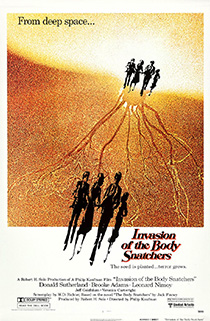
Year: 1978
Director: Philip Kaufman
There’s no real need for the film’s credit-limned intro—a nature-documentary-like sequence in which the alien spores soon to take over all of Earth float through the cosmos and down to our stupid third berg from the Sun—because from the moment we meet health inspector Matthew Bennell (Donald Sutherland) and the colleague with whom he’s hopelessly smitten, Elizabeth Driscoll (Brooke Adams), the world through which they wander seems suspiciously off. Although Philip Kaufman’s remake of Don Siegel’s 1956 Invasion of the Body Snatchers begins as a romantic comedy of sorts, pinging dry-witted lines between flirty San Franciscan urbanites as Danny Zeitlin’s score strangely lilts louder and louder overhead, Kaufman laces each frame with malice. Oddly acting extras populate the backgrounds of tracking shots and garbage trucks filled with weird dust fluff (which we eventually learn spreads the spores) exist at the fringes of the screen. The audience, of course, puts the pieces together long before the characters do—characters who include Jeff Goldblum at his beanpole-iest and Leonard Nimoy at his least Spock-iest—but that’s the point: As our protagonists slowly discover that the world they know is no longer anything they understand, so does such simmering anxiety fill and then usurp the film. Kaufman piles on more and more revolting, unnerving imagery until he offers up a final shot so bleak that he might as well be punctuating his film, and his vision of modern life, with a final, inevitable plunge into the mouth of Hell. —Dom Sinacola
Year: 1978
Director: Philip Kaufman
There’s no real need for the film’s credit-limned intro—a nature-documentary-like sequence in which the alien spores soon to take over all of Earth float through the cosmos and down to our stupid third berg from the Sun—because from the moment we meet health inspector Matthew Bennell (Donald Sutherland) and the colleague with whom he’s hopelessly smitten, Elizabeth Driscoll (Brooke Adams), the world through which they wander seems suspiciously off. Although Philip Kaufman’s remake of Don Siegel’s 1956 Invasion of the Body Snatchers begins as a romantic comedy of sorts, pinging dry-witted lines between flirty San Franciscan urbanites as Danny Zeitlin’s score strangely lilts louder and louder overhead, Kaufman laces each frame with malice. Oddly acting extras populate the backgrounds of tracking shots and garbage trucks filled with weird dust fluff (which we eventually learn spreads the spores) exist at the fringes of the screen. The audience, of course, puts the pieces together long before the characters do—characters who include Jeff Goldblum at his beanpole-iest and Leonard Nimoy at his least Spock-iest—but that’s the point: As our protagonists slowly discover that the world they know is no longer anything they understand, so does such simmering anxiety fill and then usurp the film. Kaufman piles on more and more revolting, unnerving imagery until he offers up a final shot so bleak that he might as well be punctuating his film, and his vision of modern life, with a final, inevitable plunge into the mouth of Hell. —Dom Sinacola
10. Interview with The Vampire: The Vampire Chronicles

Year: 1994
Director: Neil Jordan
Anne Rice’s 1976 gothic novel about bloodsuckers in Spanish Louisiana got the epic big-screen treatment almost two decades after its debut, and 200 years after its narrator Louis’ induction into the immortal realm. New Orleans—home to many “cities of the dead” or above-ground cemeteries, due in part to the plagues that ravaged late 18th century slums—is also the perfect setting for a grief-stricken, navel-gazing young plantation owner like Louis (played by Brad Pitt) to lose himself. Preening and stalking his way through the streets, Louis’ maker and lead vamp Lestat (Tom Cruise) embodies an otherworldly decadence and European sophistication. Cruise, whose casting was initially criticized by Rice herself, nails it as a glib, undead dandy. A preteen Kirsten Dunst steals scenes as a spitfire orphan-turned-ageless bloodsucker, while Antonio Banderas and Stephen Rea terrify in their limited screen time. Director Neil Jordan, working with cinematographer Philippe Rousselot and production designer Dante Ferretti, captures their nocturnal existence in hedonistic hues and the light of lanterns strewn throughout the French Quarter, a universe that still stands frozen in time. —Amanda Schurr
Year: 1994
Director: Neil Jordan
Anne Rice’s 1976 gothic novel about bloodsuckers in Spanish Louisiana got the epic big-screen treatment almost two decades after its debut, and 200 years after its narrator Louis’ induction into the immortal realm. New Orleans—home to many “cities of the dead” or above-ground cemeteries, due in part to the plagues that ravaged late 18th century slums—is also the perfect setting for a grief-stricken, navel-gazing young plantation owner like Louis (played by Brad Pitt) to lose himself. Preening and stalking his way through the streets, Louis’ maker and lead vamp Lestat (Tom Cruise) embodies an otherworldly decadence and European sophistication. Cruise, whose casting was initially criticized by Rice herself, nails it as a glib, undead dandy. A preteen Kirsten Dunst steals scenes as a spitfire orphan-turned-ageless bloodsucker, while Antonio Banderas and Stephen Rea terrify in their limited screen time. Director Neil Jordan, working with cinematographer Philippe Rousselot and production designer Dante Ferretti, captures their nocturnal existence in hedonistic hues and the light of lanterns strewn throughout the French Quarter, a universe that still stands frozen in time. —Amanda Schurr
9. The Evil Dead
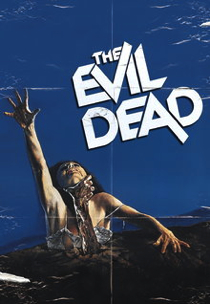
Year: 1982
Director: Sam Raimi
Infamously pieced together from $350,000 and an exceptional amount of goodwill, The Evil Dead, when looking back at it, seems to have created a kind of horror unto itself. Sam Raimi’s debut, of course, is notable for so much more than that: like how it was edited by Joel Coen; or how Stephen King’s rabid interest caught the attention of a major studio, giving Raimi and close bud Bruce Campbell the chance to pour everything they knew about slashers, slapstick, camp, pulp, and fantasy into Evil Dead II, a kind of sequel/reboot hybrid. But the real gauge of The Evil Dead’s tenor is perhaps best exemplified by the fact that its 2013 remake was something of a sickening feast for gore-hounds. For those familiar with Evil Dead II and the even sillier Army of Darkness, the fact that the original film was more of a straightforward genre affair feels somehow off; behold cognitive dissonance in full effect. And yet, somehow this rudimentary story of five Michigan State students who unwittingly unleash ancient demons in a cabin in the woods is still surprisingly, mercilessly skin-crawling. Leave it to Sam Raimi to stretch a dollar so far the sound of it snapping has the same effect on our stomachs as a classic bump in the night.—Dom Sinacola
Year: 1982
Director: Sam Raimi
Infamously pieced together from $350,000 and an exceptional amount of goodwill, The Evil Dead, when looking back at it, seems to have created a kind of horror unto itself. Sam Raimi’s debut, of course, is notable for so much more than that: like how it was edited by Joel Coen; or how Stephen King’s rabid interest caught the attention of a major studio, giving Raimi and close bud Bruce Campbell the chance to pour everything they knew about slashers, slapstick, camp, pulp, and fantasy into Evil Dead II, a kind of sequel/reboot hybrid. But the real gauge of The Evil Dead’s tenor is perhaps best exemplified by the fact that its 2013 remake was something of a sickening feast for gore-hounds. For those familiar with Evil Dead II and the even sillier Army of Darkness, the fact that the original film was more of a straightforward genre affair feels somehow off; behold cognitive dissonance in full effect. And yet, somehow this rudimentary story of five Michigan State students who unwittingly unleash ancient demons in a cabin in the woods is still surprisingly, mercilessly skin-crawling. Leave it to Sam Raimi to stretch a dollar so far the sound of it snapping has the same effect on our stomachs as a classic bump in the night.—Dom Sinacola
8. Baskin

Year: 2016
Director: Can Evrenol
It is telling that the single scariest image in Baskin emphasizes creeps over carnage. It’s a shot of a boy standing alone in his living room, illuminated only by the static glow of his family’s television set, which has inexplicably turned itself on in the middle of the night. Nothing about the scenario is overtly terrifying—at least until he shuts the TV off—but it is memorably real in a film where it’s difficult to distinguish what is and isn’t imagined. Grand guignol-level spectacle where every character in the frame is streaked with viscera? That’s one thing. Domestic peculiarities that invoke nocturnal aberrations, though, are another thing entirely. The film evokes the artistic sensibilities of both Lucio Fulci and Dario Argento with its lurid color palette, but it carves a gore-streaked path all its own. —Andy Crump
Year: 2016
Director: Can Evrenol
It is telling that the single scariest image in Baskin emphasizes creeps over carnage. It’s a shot of a boy standing alone in his living room, illuminated only by the static glow of his family’s television set, which has inexplicably turned itself on in the middle of the night. Nothing about the scenario is overtly terrifying—at least until he shuts the TV off—but it is memorably real in a film where it’s difficult to distinguish what is and isn’t imagined. Grand guignol-level spectacle where every character in the frame is streaked with viscera? That’s one thing. Domestic peculiarities that invoke nocturnal aberrations, though, are another thing entirely. The film evokes the artistic sensibilities of both Lucio Fulci and Dario Argento with its lurid color palette, but it carves a gore-streaked path all its own. —Andy Crump
7. Honeymoon

Year: 2014
Director: Leigh Janiak
The cool thing about horror is that if you just have the vision, you can make something like Honeymoon with no more resources than an empty cabin and a few weeks of spare time. The film only has four actors, and two of them barely appear, leaving everything on the shoulders of the two young stars, Rose Leslie (Ygritte from Game of Thrones) and Harry Treadway. This is the right decision to make: If you’ve got a few solid, young actors, why not let the film just become a statement of their talents? The story is extremely simple, with a newlywed couple going on their honeymoon in a remote cabin in the woods. When Bea, the wife, wanders away one night and has some kind of disturbing event in the woods, she comes back changed, and it begins to affect both her memory and sense of identity. The next hour or so is a slow-burning but well-acted and suspenseful journey for the two as the husband’s suspicions grow and the warning flags continue to mount. By the end, emotions and gross-out scares are both running high. —Jim Vorel
Year: 2014
Director: Leigh Janiak
The cool thing about horror is that if you just have the vision, you can make something like Honeymoon with no more resources than an empty cabin and a few weeks of spare time. The film only has four actors, and two of them barely appear, leaving everything on the shoulders of the two young stars, Rose Leslie (Ygritte from Game of Thrones) and Harry Treadway. This is the right decision to make: If you’ve got a few solid, young actors, why not let the film just become a statement of their talents? The story is extremely simple, with a newlywed couple going on their honeymoon in a remote cabin in the woods. When Bea, the wife, wanders away one night and has some kind of disturbing event in the woods, she comes back changed, and it begins to affect both her memory and sense of identity. The next hour or so is a slow-burning but well-acted and suspenseful journey for the two as the husband’s suspicions grow and the warning flags continue to mount. By the end, emotions and gross-out scares are both running high. —Jim Vorel
6. The Canal

Year: 2014
Director: Ivan Kavanagh
This indie Irish horror film announces Ivan Kavanagh as a serious talent and remarkably skilled director—it’s the kind of film you might watch on a streaming service with zero expectations, only to be completely blown away. Nominally a “ghost story” of sorts about a man who discovers a century old grisly crime that occurred in his house, it’s actually much more of a psychologically intense minefield—the sort of film that Polanski would have made, if there actually were ghosts in Repulsion. Combining elements that remind one of The Shining’s superb sound design with the surrealist, red-and-blue color palette of a film by Dario Argento, it is impeccably put together and beautiful to look at. The story, unfortunately, gets just a little bit too literal and wraps things up a bit neatly in the last 15 minutes, but the movie crafts an extremely effective web of dread and genuine fear through its entire runtime. Here’s hoping that we see another horror film from Kavanagh at some point. —Jim Vorel
Year: 2014
Director: Ivan Kavanagh
This indie Irish horror film announces Ivan Kavanagh as a serious talent and remarkably skilled director—it’s the kind of film you might watch on a streaming service with zero expectations, only to be completely blown away. Nominally a “ghost story” of sorts about a man who discovers a century old grisly crime that occurred in his house, it’s actually much more of a psychologically intense minefield—the sort of film that Polanski would have made, if there actually were ghosts in Repulsion. Combining elements that remind one of The Shining’s superb sound design with the surrealist, red-and-blue color palette of a film by Dario Argento, it is impeccably put together and beautiful to look at. The story, unfortunately, gets just a little bit too literal and wraps things up a bit neatly in the last 15 minutes, but the movie crafts an extremely effective web of dread and genuine fear through its entire runtime. Here’s hoping that we see another horror film from Kavanagh at some point. —Jim Vorel
5. Hellraiser
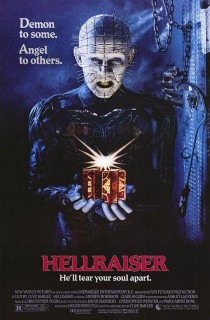
Year: 1987
Director: Clive Barker
The head villain/eventual hero (there’s a sickening number of terrible Hellraiser sequels) behind Clive Barker’s Hellraiser franchise is the Cenobite Pinhead, sent from the pits of his own personal hell dimension to drag you down into the depths with him. Where he tortures you. For eternity. All because you opened a fancy Rubik’s Cube. Pinhead has zero remorse, looking you dead in the eye as he delivers a deadpan promise to “tear your soul apart.” Oh yeah, and they’re indestructible. Personally, it turned me off to puzzle boxes forever. As in his fiction, Barker’s obsessions with the duality of pain and pleasure are on full display in the film version of Hellraiser, an icky story of sick love and obsession. —Rachel Haas
Year: 1987
Director: Clive Barker
The head villain/eventual hero (there’s a sickening number of terrible Hellraiser sequels) behind Clive Barker’s Hellraiser franchise is the Cenobite Pinhead, sent from the pits of his own personal hell dimension to drag you down into the depths with him. Where he tortures you. For eternity. All because you opened a fancy Rubik’s Cube. Pinhead has zero remorse, looking you dead in the eye as he delivers a deadpan promise to “tear your soul apart.” Oh yeah, and they’re indestructible. Personally, it turned me off to puzzle boxes forever. As in his fiction, Barker’s obsessions with the duality of pain and pleasure are on full display in the film version of Hellraiser, an icky story of sick love and obsession. —Rachel Haas
4. The Orphanage

Year: 2007
Director: J.A. Bayona
It seems safe to say that director J.A. Bayona was more than a little influenced by Guillermo Del Toro’s The Devil’s Backbone when he laid out The Orphanage, but the film also channels a more stately, gothic brand of horror rather than the dusty, dingy realism of Del Toro’s Spanish Civil War ghost story. Here we have something with a bit more grandeur—a crumbling, seaside mansion that would look out of place if it didn’t have a ghost. Belén Rueda is fantastic as Laura, a woman who moves into the orphanage where she grew up with her husband and young son, before being drawn into the secret history of both the house and the other former orphans who once lived there alongside her. Deep-seated emotion and the impossible desire to protect loved ones from the inevitable permeate the film, but once the home’s restless spirits become active, it’s also quite chilling. Tomás (Oscar Casas), the sack-masked young boy you’ll no doubt see on the DVD cover of The Orphanage, cuts an iconic figure among child ghosts, but it’s the things left unseen that make The Orphanage chilling. The scene featuring a reprise of the knock-knock game once played by the orphans is almost unbearably tense. —Jim Vorel
Year: 2007
Director: J.A. Bayona
It seems safe to say that director J.A. Bayona was more than a little influenced by Guillermo Del Toro’s The Devil’s Backbone when he laid out The Orphanage, but the film also channels a more stately, gothic brand of horror rather than the dusty, dingy realism of Del Toro’s Spanish Civil War ghost story. Here we have something with a bit more grandeur—a crumbling, seaside mansion that would look out of place if it didn’t have a ghost. Belén Rueda is fantastic as Laura, a woman who moves into the orphanage where she grew up with her husband and young son, before being drawn into the secret history of both the house and the other former orphans who once lived there alongside her. Deep-seated emotion and the impossible desire to protect loved ones from the inevitable permeate the film, but once the home’s restless spirits become active, it’s also quite chilling. Tomás (Oscar Casas), the sack-masked young boy you’ll no doubt see on the DVD cover of The Orphanage, cuts an iconic figure among child ghosts, but it’s the things left unseen that make The Orphanage chilling. The scene featuring a reprise of the knock-knock game once played by the orphans is almost unbearably tense. —Jim Vorel
3. Annihilation
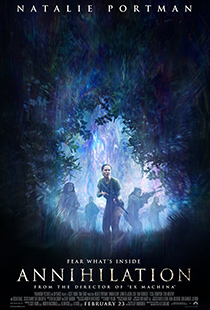
Year: 2018
Director: Alex Garland
Annihilation is a movie that’s impossible to shake. Like the characters who find themselves both exploring the world of the film and inexplicably trapped by it, you’ll find yourself questioning yourself throughout, wondering whether what you’re watching can possibly be real, whether maybe you’re losing it a little yourself. The film is a near-impossible bank shot by Ex Machina filmmaker Alex Garland, a would-be science fiction actioner that slowly reveals itself to be a mindfuck in just about every possible way, a film that wants you to invest in its universe yet never gives you any terra firma on which you can orient yourself. This is a film that wants to make you feel as confused and terrified as the characters you’re watching. In this, it is unquestionably successful. This is a risky proposition for a director, particularly with a big studio movie with big stars like this one: a movie that becomes more confusing and disorienting as it goes along. Garland mesmerizes with his visuals, but he wants you to be off-balance, to experience this world the way Lena (Natalie Portman) and everyone else is experiencing it. Like the alien (I think?) of his movie, Garland is not a malevolent presence; he is simply an observer of this world, one who follows it to every possible permutation, logical or otherwise. It’s difficult to explain Annihilation, which is a large reason for its being. This is a film about loss, and regret, and the sensation that the world is constantly crumbling and rearranging all around you every possible second. The world of Annihilation looks familiar, but only at first. Reality is fluid, and ungraspable. It can feel a little like our current reality in that way. —Will Leitch
Year: 2018
Director: Alex Garland
Annihilation is a movie that’s impossible to shake. Like the characters who find themselves both exploring the world of the film and inexplicably trapped by it, you’ll find yourself questioning yourself throughout, wondering whether what you’re watching can possibly be real, whether maybe you’re losing it a little yourself. The film is a near-impossible bank shot by Ex Machina filmmaker Alex Garland, a would-be science fiction actioner that slowly reveals itself to be a mindfuck in just about every possible way, a film that wants you to invest in its universe yet never gives you any terra firma on which you can orient yourself. This is a film that wants to make you feel as confused and terrified as the characters you’re watching. In this, it is unquestionably successful. This is a risky proposition for a director, particularly with a big studio movie with big stars like this one: a movie that becomes more confusing and disorienting as it goes along. Garland mesmerizes with his visuals, but he wants you to be off-balance, to experience this world the way Lena (Natalie Portman) and everyone else is experiencing it. Like the alien (I think?) of his movie, Garland is not a malevolent presence; he is simply an observer of this world, one who follows it to every possible permutation, logical or otherwise. It’s difficult to explain Annihilation, which is a large reason for its being. This is a film about loss, and regret, and the sensation that the world is constantly crumbling and rearranging all around you every possible second. The world of Annihilation looks familiar, but only at first. Reality is fluid, and ungraspable. It can feel a little like our current reality in that way. —Will Leitch
2. Evil Dead 2
Year: 1987
Director: Sam Raimi
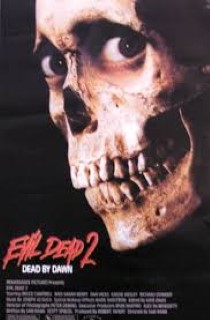
On the surface, Evil Dead 2 is essentially a remake of the first 1981 Evil Dead: Sam Raimi going back to an idea he clearly enjoyed with a bigger budget and more experience to “get it right” by upping the ante of the original. But Raimi also offers up some tweaks that fundamentally alter the nature and tone of the first film, changing the recipe from “horror with occasional moments of black comedy” to a more even mix of both that still doesn’t skimp on scares or guts. Bruce Campbell as Ash goes from being almost a passive “final girl” character in the first film to a much more capable, wisecracking hero right from the get-go, and significantly more of the film features him in a tour-de-force solo performance, which helps make Evil Dead 2 one of the most tightly paced horror films ever. It wastes no time, going straight into its comic violence within the first 10 minutes and never letting up. It’s a film indicative of the changing attitude toward zombies—at this point in the late ’80s it’s becoming rare that zombies are ever treated as simply “scary.” More and more frequently, they’re instead incorporated into madcap comedies and action films à la Evil Dead, and this is a trend that continued through the ’90s. —Jim Vorel
Year: 1987
Director: Sam Raimi
On the surface, Evil Dead 2 is essentially a remake of the first 1981 Evil Dead: Sam Raimi going back to an idea he clearly enjoyed with a bigger budget and more experience to “get it right” by upping the ante of the original. But Raimi also offers up some tweaks that fundamentally alter the nature and tone of the first film, changing the recipe from “horror with occasional moments of black comedy” to a more even mix of both that still doesn’t skimp on scares or guts. Bruce Campbell as Ash goes from being almost a passive “final girl” character in the first film to a much more capable, wisecracking hero right from the get-go, and significantly more of the film features him in a tour-de-force solo performance, which helps make Evil Dead 2 one of the most tightly paced horror films ever. It wastes no time, going straight into its comic violence within the first 10 minutes and never letting up. It’s a film indicative of the changing attitude toward zombies—at this point in the late ’80s it’s becoming rare that zombies are ever treated as simply “scary.” More and more frequently, they’re instead incorporated into madcap comedies and action films à la Evil Dead, and this is a trend that continued through the ’90s. —Jim Vorel
1. Rosemary’s Baby
Year: 1968
Director: Roman Polanski
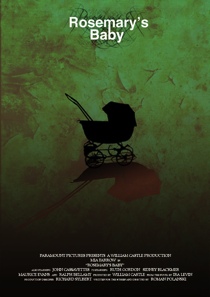
The banality of evil isn’t a concept new to the horror genre—look to recent shock-plagued entries like The Eyes of My Mother, or, say, Mickey Keating’s interminable Psychopaths to watch bad things happen for no other reason than that they can—but in Roman Polanski’s troubled hands, that banality is an unadulterated expression of a deep-seated, institutionalized horror, one so ingrained in our society it becomes practically organic. With Rosemary’s Baby, the body of young Rosemary (Mia Farrow) is the institution through which Satan’s malice gestates, a body over which everyone but Rosemary herself seems to have any control. At the mercy of her overbearing neighbors (played by a pitch-perfect Ruth Gordon and Sidney Blackmer), her Ur-Dudebro husband, Guy (John Cassavetes), and the doctor (Ralph Bellamy) recommended by her high society cadre of new friends, Rosemary is treated as if she’s the last person who knows what’s best for her and her fetus—a position she accepts as a matter of fact. She’s only a woman, a homemaker at that, so such is her lot. Of course, the worse she feels and the more fraught her pregnancy becomes—as well as the recurring flashes of a ghastly dream she can’t quite shake—the clearer Rosemary begins to suspect she’s an unwilling pawn in something cosmically insidious. She is, is the absurd truth: She is the mother of Satan’s offspring, the victim of a coven’s will to worship their Dark Lord much more fruitfully. More than the director’s audacious Hollywood debut, not to mention the omen of what New Hollywood would be willing to do to tear down tradition, Rosemary’s Baby is a landmark horror film because of how ordinary, how easy, it is for everyone else in Rosemary’s life to crush a woman’s spirit and take her life. “It’s alive!” Rosemary screams, echoing Frankenstein with outsize aplomb, her declaration hardly one of triumph, but of disbelief that such a nightmare is the life she’s just going to have to accept. —Dom Sinacola
Year: 1968
Director: Roman Polanski
The banality of evil isn’t a concept new to the horror genre—look to recent shock-plagued entries like The Eyes of My Mother, or, say, Mickey Keating’s interminable Psychopaths to watch bad things happen for no other reason than that they can—but in Roman Polanski’s troubled hands, that banality is an unadulterated expression of a deep-seated, institutionalized horror, one so ingrained in our society it becomes practically organic. With Rosemary’s Baby, the body of young Rosemary (Mia Farrow) is the institution through which Satan’s malice gestates, a body over which everyone but Rosemary herself seems to have any control. At the mercy of her overbearing neighbors (played by a pitch-perfect Ruth Gordon and Sidney Blackmer), her Ur-Dudebro husband, Guy (John Cassavetes), and the doctor (Ralph Bellamy) recommended by her high society cadre of new friends, Rosemary is treated as if she’s the last person who knows what’s best for her and her fetus—a position she accepts as a matter of fact. She’s only a woman, a homemaker at that, so such is her lot. Of course, the worse she feels and the more fraught her pregnancy becomes—as well as the recurring flashes of a ghastly dream she can’t quite shake—the clearer Rosemary begins to suspect she’s an unwilling pawn in something cosmically insidious. She is, is the absurd truth: She is the mother of Satan’s offspring, the victim of a coven’s will to worship their Dark Lord much more fruitfully. More than the director’s audacious Hollywood debut, not to mention the omen of what New Hollywood would be willing to do to tear down tradition, Rosemary’s Baby is a landmark horror film because of how ordinary, how easy, it is for everyone else in Rosemary’s life to crush a woman’s spirit and take her life. “It’s alive!” Rosemary screams, echoing Frankenstein with outsize aplomb, her declaration hardly one of triumph, but of disbelief that such a nightmare is the life she’s just going to have to accept. —Dom Sinacola


Comments
Post a Comment