Best Horror Novels Of All Time
Best Horror Novels of All Time

Horror is a peculiar genre. If it’s meant purely to scare, then some of the heftier books on this list would have wracked up a body count, terrifying readers to death over 700 pages or more. And what is scary? What might shock one reader is laughable to another. Ghosts, serial killers, great heaving monsters, the loss of self-control, plagues, impossible physics and a creepy clown all figure into our countdown, with entries spanning from the 1800s to the last few years. One (obvious) author makes five(!) appearances, and easily could have qualified for a few more; another has written just one novel during his decades-long career. We narrowed our focus to prose novels, so please don’t ask after The Books of Blood or Uzumaki. And while we kept an eye on the diversity of our featured authors, the inclusion of women, authors of color and queer creators came naturally as we gathered the best of the best. We’re prepared for you to question our choices, we ask only that you leave the chainsaw at home before doing so. Without further ado, we present our choices for the best horror novels of all time.

1.The Summer Is Ended and We Are Not Yet Saved by Joey Comeau (2014)

Joey Comeau’s first horror outing, One Bloody Thing After Another, is perhaps creepier and more unsettling than this summer-camp slasher. But The Summer Is Ended and We Are Not Yet Saved gets the nod for importing the genre from film into prose while layering in subtle, smart commentary on our thirst for teen blood. Eleven-year-old Martin is used to entrails—his mother does special-effect makeup for horror movies—but would like to keep his inside of his body. A maniac employed at his bible camp has other intentions. The title of Comeau’s previous novel would have worked here just as well: the gory killings are one bloody thing after the other, stacking up as a reminder that we’ve created a prolific genre around watching kids get murdered in inventive ways.
—Sejju Roman
2.The Woman in Black by Susan Hill (1983)

One of the biggest tonal outliers on this list, Susan Hill’s The Woman in Black is crafted like a traditional gothic novel, and could likely fool readers into thinking that Hill is a few hundred years older than she truly is. Published in 1983, The Woman in Black is best known today for inspiring one of the longest-running plays in London’s West End (and a Daniel Radcliffe movie). Structured in the classic British form of a story told around a fireplace, Hill’s short ‘80s anachronism chills thanks to its ominous titular figure, who stalks a house on the foggy moors and foretells the death of children. The Woman in Black may not feel like a quintessentially ‘80s horror novel, but it’s an excellent reminder that, even at the peak of its copycat boom period, the genre refused to be pigeonholed.
—Sejju Roman
3.A Head Full of Ghosts by Paul Tremblay (2015)

In this Bram Stoker Award-winning tale, author Paul Tremblay (whose follow-up, Disappearance at Devil’s Rock, is absolutely chilling if a bit baffling at the very end) manages to both examine the possession subgenre and break new ground with its tired tropes. Fourteen-year-old Marjorie Barrett starts displaying signs of schizophrenia, or maybe it’s just teenage rebellion…or maybe it’s something more. Before long, Marjorie’s out-of-work father agrees to let a reality-TV crew film an attempt to exorcise his daughter’s demons. Cutting between the events of the show and an interview with Marjorie’s younger sister, filmed 15 years after the show’s conclusion, Tremblay walks a razor-thin edge between confirming and denying which forces are actually at play within Marjorie’s head, keeping readers guessing well after the final page is turned.
—Sejju Roman
4. The Damnation Game by Clive Barker (1985)
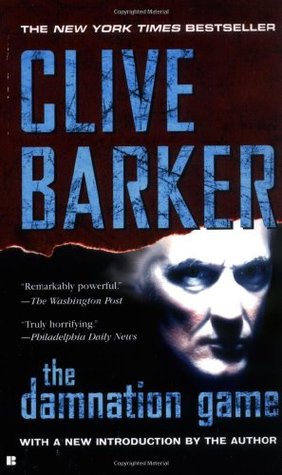
The Damnation Game proved that Books of Blood wunderkind Clive Barker could sustain his brand of fear beyond the duration of a short story. Barker’s most compelling skill—the ability to blend lust and revulsion, desire and disgust—is on full display. In this depraved galleria of a novel, with graphic depictions of incest and cannibalism, an in-over-his-head bodyguard attempts to interfere a Faustian pact to save the relatively innocent daughter of a wealthy degenerate. After the first few years of his career, Barker more often delved into dark fantasy than straight-up horror. The Damnation Game, published between Barker’s debut short story collection and the fatefully successful novella The Hellbound Heart (which you may know by its film adaptation, Hellraiser), is still the purest long-form expression of the man’s penchant for plunging the darkest corners of the human imagination.
—Steve Foxe
5. Audition by Ryu Murakami (1997)

Ryu Murakami’s Audition is outshined in popularity by Takeshi Miike’s film adaptation of the same name, and a case could be made that Miike’s version is the superior telling of the story. There’s something unforgettable about Murakami’s original prose though; blunt to the point of over-explanation, Murakami lays bare the psychology behind the plot, and forces the reader to confront his or her own role in the voyeurism of violence and manipulation. There’s also an intimacy present in the novel that the movie keeps at arm’s length, to the point that you genuinely worry for widower Aoyama during the infamously shocking climax. Piercing and In the Miso Soup are similarly disturbing tales from this master of Japanese thrillers.
5.The Devil in Silver by Victor LaValle (2012)

Victor LaValle cites Shirley Jackson as an influence, and that lineage is easy to identify in this literary piece that’s as much about institutional failings as it is about the bison-headed devil wandering the halls of a mental institution. Pepper, the novel’s protagonist, can’t quite recall the crime he (supposedly) committed, but he knows he was only supposed to be held in New Hyde Hospital for a few days at most. LaValle wrings dread out of Pepper and his fellow inmates’ helplessness, sticking to Jackson’s level of unease instead of attempting all-out terror. By the end, the reality of the titular devil is almost ancillary to the horror that’s been revealed.
—Steve Foxe
6. Bird Box by Josh Malerman (2015)

With your eyes closed and your imagination unfettered, you can envision creatures whose monstrosity knows no bounds. Detroit-based author Josh Malerman manifests an apocalypse of the obscured in Bird Box, in which undiscovered entities start appearing around the world and just one glance of their grotesquery drives people to suicide. In the book’s unforgettable introduction, our protagonist travels down a river with black fabric knotted around her eyes, shepherding two similarly blinded four-year-olds, rowing their way to an uncertain sanctuary while any sound they hear could very well be one of these monsters sloshing ever closer to the bow of the boat.
—Jeff Milo
7. Burnt Offerings by Robert Marasco (1973)
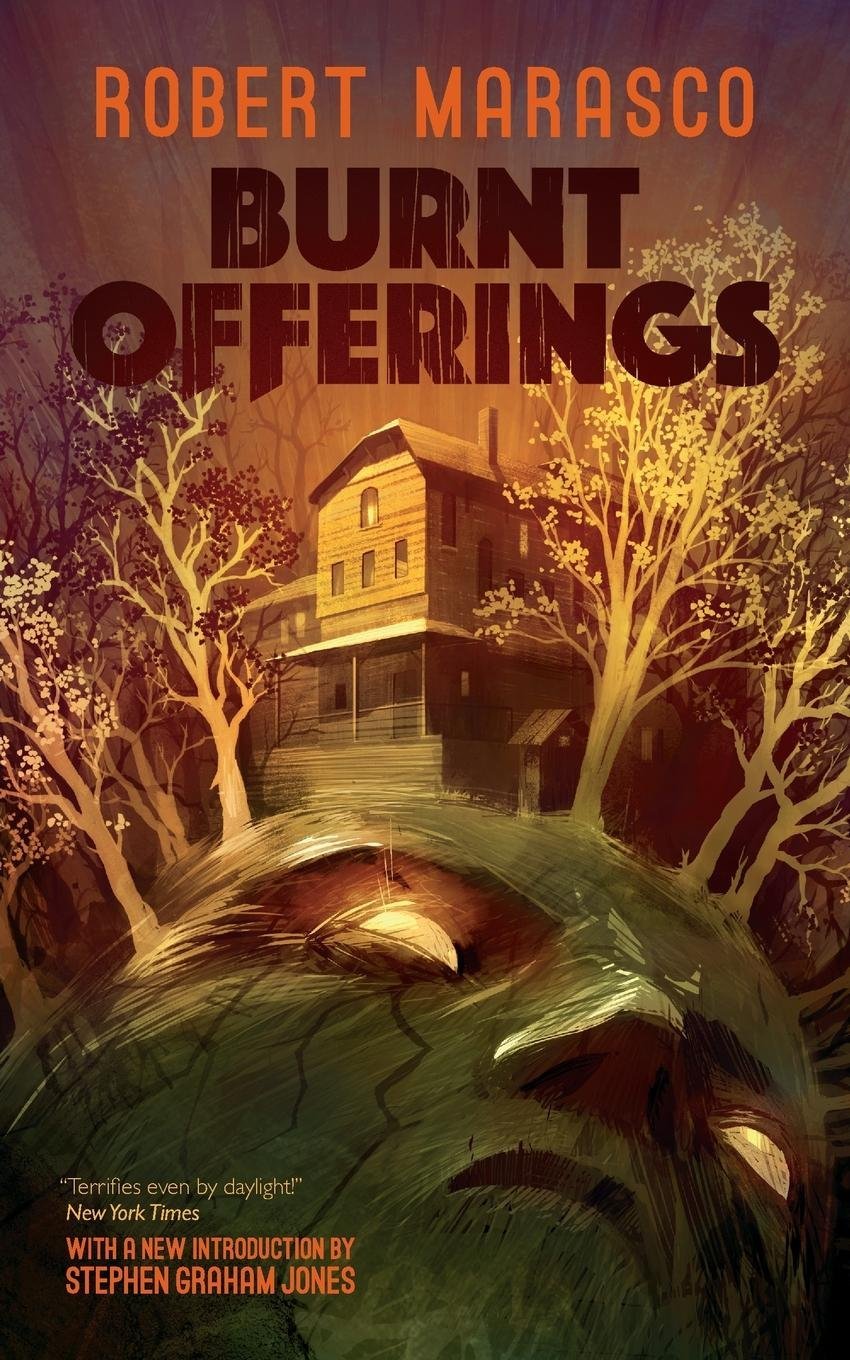
Stephen King’s ‘70s and ‘80s classics are still so widely celebrated today that it’s easy to forget just how many genre standouts disappeared when the horror shelves waned in popularity in the early ‘90s. Robert Marasco’s Burnt Offerings is one such casualty of our short-term memory, and even its 1976 film version (starring Karen Black and Bette Davis!) is largely unknown to modern fans. The Rolfe family rent a vacation home at the far end of Long Island to get away from their Queens apartment for the summer months. The only unusual stipulation about the home is that the property owners’ elderly mother is to stay in the house’s top floor, confined to her apartment, and fed three times daily. If that’s setting off any warning bells for you, congratulations: you’re smarter than the Rolfe family. As with King’s The Shining, which followed in 1977, Burnt Offerings turns a sprawling home into an oppressive, malevolent force to be reckoned with.
—Steve Foxe
8. John Dies at the End by David Wong (2007)

A rollercoaster of weird, sprung from a hallucinogenic (and possibly demonic) drug known as soy sauce and written in bracing, punchy style shooting swift sentences, often sliced to seven words or less, and stung with spicy diction detailing psychedelic imagery and delivered with sustained breathlessness. Something of a punk-rock-ified, video-game-esque tear and tumble into the Weird Tales tradition, Wong (a.k.a. humorist Jason Pargin, of Cracked.com), charismatically clusters together a hip and highly evocative narrative of monstrosities, with plenty of barbs any 17-year-old could snigger at… Think of it as the horror-heavier cousin to Ready Player One.
—Jeff Milo
9. Savaging the Dark by Christopher Conlon (2014)

Christopher Conlon’s all-too-possible Savaging the Dark shares a premise with Alissa Nutting’s controversial Tampa, but the differences in execution are what makes this novel truly horrific and Nutting’s more of a pitch-black comedy. Conlon’s narrator, Mona Straw, slowly unravels while carrying out an affair…with her 11-year-old student. Whereas Tampa introduced an admitted predator from the first page, Conlon takes care to build a believable case for how Mona justifies her taboo actions, even as her control of the situation—and her sanity—slip out of her grasp. Of all the novels on this list, Savaging the Dark may be one of the scariest if only because of its plausibility.
—Steve Foxe
10. Rebecca by Daphne du Maurier (1938)
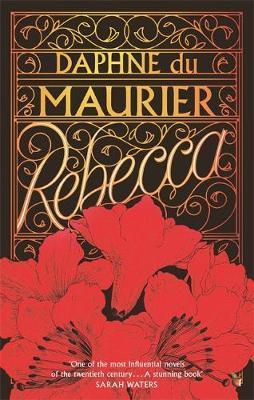
Rebecca didn’t coin the term “gaslighting,” but it’s one of literature’s most chilling examples of psychological harassment. A naïve young woman falls for a handsome, older widower, and agrees to become his bride after only a brief courtship. When she arrives at his impressive estate, she finds herself at the mercy of a housekeeper who remains fiercely loyal to the widower’s late wife, and has no hesitance in making that clear to the protagonist—or in undermining the protagonist’s confidence and sense of security however possible. Rebecca has sold somewhere around 3,000,000 copies in its lifetime, and its whiplash third-act twists make it easy to see what attracted Alfred Hitchcock to adapt it into an Academy Award-winning film in 1940.
—Steve Foxe
11. Geek Love by Katherine Dunn (1989)

It’s a curious thing to take on the concept of a “freak show” without slipping into ableism and other offensive tropes. Tod Browning’s seminal 1932 film Freaks revealed the ugliness in the traditionally attractive members of its cast, and Katherine Dunn’s Geek Love populates its 360-odd pages with such a wide and eclectic set of characters that of course some are bound to be reprehensible, regardless of stunted limbs or psychic predilections. Told in two time periods, Geek Love follows a family of intentionally bred “freaks”—the family’s progenitors consume various drugs and chemicals to produce different birth defects—as they grapple with telekinetic incest, burgeoning cults and consensual amputation. It sounds like a splatterpunk nightmare, but Dunn’s novel earned its National Book Award finalist nod because of the heart that beats under its freakish exterior.
—Steve Foxe
12. Heart-Shaped Box by Joe Hill (2007)

An over-the-hill rock star buys a haunted suit on the Internet. It sounds like the setup to a bad joke, not the plot of one of horror fiction’s most important debut novels of the century, but Joe Hill throttles into his premise and never lets up. While Horns is fast and punchy and NOS4A2 is sprawling and darkly fantastical, Heart-Shaped Box is like a long motorcycle ride straight into despair. Judas Coyne, Hill’s Rob-Halford-meets-Glenn-Danzig protagonist, confronts both a sinister spirit and the intersection of his own myth and humanity, joined by his two loyal hounds and the latest in a string of female groupies named after their states of origin. Eleven years and several major works from Hill later, it’s clear that this chilling debut wasn’t a fluke.
—Steve Foxe
13. World War Z by Max Brooks (2006)

Zombie fiction has never come close to the cultural impact and artistic importance of zombie cinema, until World War Z came along. Nobody had thought to take the idea of a zombie apocalypse and truly dive into the guts of everything else besides the violence, and that’s what makes Max Brooks’ book so incredible. If you’re not aware, it isn’t a true “novel”—rather, it’s presented like a journalistic report in a series of dozens of interviews with people from all over the globe on how they survived the zombie crisis. The audience gets to see exactly how it all went down, and Brooks’ gift is in making it all seem so reasonable, because he considers every possible eventuality. He shows us how the infection could realistically spread around the globe thanks to human trafficking. He shows us how modern militaries could possibly be defeated via poor planning and mass defections. He shows us how society might be after 90 percent of humanity has been killed and an uneasy rebuilding period has begun. Ignore the existence of the horrendous, slap-in-the-face film adaptation with Brad Pitt and simply read the book, because World War Z is easily the best piece of zombie fiction ever written.
—Jim Vorel
14. The Other by Thomas Tryon (1971)
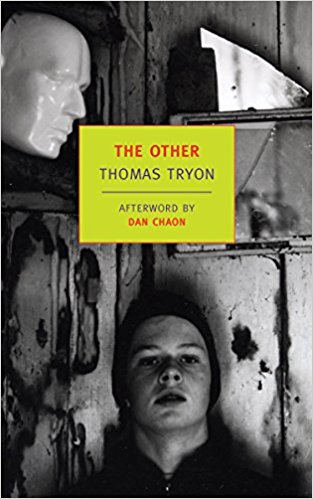
In his excellent genre-history-slash-oddity-collection Paperbacks From Hell, novelist Grady Hendrix makes clear that Thomas Tyron’s The Other was a sensation, becoming a near-instant bestseller and helping, alongside The Exorcist and Rosemary’s Baby, to kick off the paperback horror boom period of the ‘70s and ‘80s. The tale of twin 13-year-old boys, one kind and unassuming, one growing increasingly sinister, hit the perfect sweet spot of can’t-look-away homegrown horror to attract mass audiences, just as film The Bad Seed did decades earlier. The Other hasn’t maintained the pop-culture staying power of its most famous contemporaries, but remains a must-read for fans of the genre.
—Steve Foxe
15. Little Star by John Ajvide Lindqvist (2011)

It’s hard not to feel a bit bad for Swedish author John Ajvide Lindqvist. Despite two stellar film adaptations of his vampire novel Let the Right One In, Stephen King comparisons take up more real estate on his American book covers than does his own name. With shades of Carrie, Little Star does little to dissuade that similarity. Two young girls, one extraordinary and one suffocating under her own feelings of mediocrity, connect online and form a friendship that will have terrible consequences. Lindqvist taps into the modern-day fears that drive adolescent anxiety—less locker room, more Internet comment section—and stretches them out to their most disturbing logical conclusion. Despite a suggestion of the supernatural, it is the violence committed by very ordinary young people that will stick with you long after you’ve finished Little Star.
—Steve Foxe
16. The Shining Girls by Lauren Beukes (2013)

While horror has always flourished on the small-press scene, Lauren Beaukes is helping to forge a continued legacy for the genre at major publishers as well. The Shining Girls is a serial killer novel unlike any other, as Harper Curtis discovers a house in Depression-era Chicago that opens its doors to other times—and comes with a kill list of “shining girls” destined to die at his hand. Kirby is the last name on the list, and the only one who survived Harper’s first murder attempt. As in her exceptional follow-up, Broken Monsters, South African novelist Beukes weaves together a diverse cast of characters and just enough science fiction to complicate her premise without distracting from the horror at hand.
—Steve Foxe
18. Girl Next Door by Jack Ketchum (1989)

Ketchum’s twisted tale of under-your-nose terror got some extra attention in 2007, when a limited-run feature film brought the story back into the horror conversation. The novel, which is based on the Indiana murder case of Sylvia Likens, follows single mother, alcoholic and next-door neighbor Ruth, who takes in two nieces after their parents die in a car accident. Ruth’s rapidly deteriorating state creates a hellish environment for the nieces and her own kids alike, and The Girl Next Door will make you think twice, thrice—Hell, probably forever—about handing your kids off to anyone.
—Tyler Kane
19. At the Mountains of Madness by H.P. Lovecraft (1936)
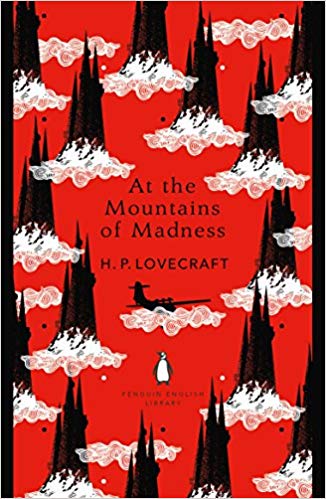
H.P. Lovecraft really wasn’t a “novelist,” per se, in the sense that he never wrote a single piece of fiction long enough to be unmistakably “a novel,” but certain stories such as “The Case of Charles Dexter Ward,” “The Shadow Out of Time” and especially novella At the Mountains of Madness are tough to categorize as anything else. Madness in particular has captivated the imaginations of audiences consistently since it was first published in 1936, and its bitterly cold, ice-caked horrors can be felt reverberating through the ages and all the way into modern AMC TV series such as the first season of The Terror. Like all of Lovecraft’s best work, it delivers its eeriness from a slowly revealed reality that our feeble human society is utterly insignificant, only existing by the whim of unimaginable forces that perhaps simply haven’t bothered to notice us just yet. And when those forces wake up to the annoyance of human incursion? Well, when that happens, “madness” might be our species only respite.
—Jim Vorel
20. The Ceremonies by T.E.D. Klein (1984)
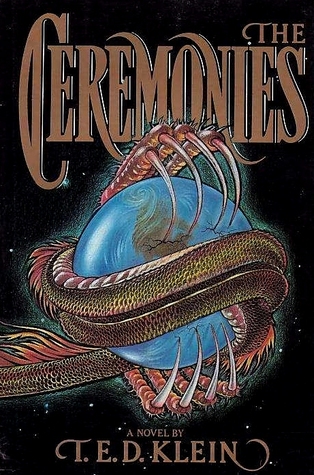
At the beginning of the year, Paste published a list of overlooked ‘80s horror novels. Stephen King sought out the author of Twitter to recommend one more: T.E.D. Klein’s The Ceremonies, which King described as, “the Moby-Dick of ‘80s horror.” Reader: he was not wrong. Klein has published just one novel in his career, but it’s a hefty one, sitting at the intersection of the Arthur Machen and Clarke Ashton Smith’s Weird Fiction tradition and the ‘80s zeitgeist of psychics and impending global annihilation. If you think you’ve read the best the genre has to offer, take King’s advice and track down this criminally forgotten tome.
—Steve Foxe
21. Interview With the Vampire by Anne Rice (1976)
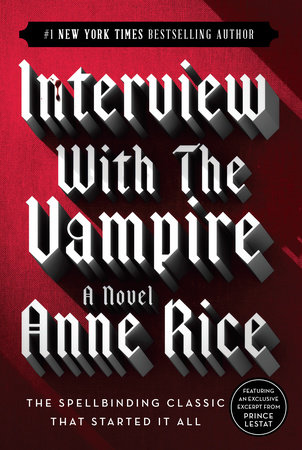
Amazingly, embarrassingly, we debated whether or not to include Anne Rice’s Interview With the Vampire on this list. Is the novel truly horror, or is it gothic romance? What an absurd delineation! Written in the wake of her young daughter’s death, Rice’s first installment in The Vampire Chronicles is a psychosexual marvel, and a turning point in vampire fiction. Rice’s vampires are tortured souls who’ve lived too long, trapped in bodies that refuse to age. It’s not simply the requirement of blood or the avoidance of sunlight that pains Rice’s immortals, but the accumulated weight of existence, and the limbo of a “life” without change. A direct line can be traced from Interview and its famous film adaptation to the surge in ‘90s goth culture and the romanticizing of vampires up through Twilight—but don’t hold that against Rice. While there’s one more vampire novel higher up our list, Interview is potentially the most important work in the subgenre since Stoker.
—Steve Foxe
22. A Choir of Ill Children by Tom Piccirilli (2003)
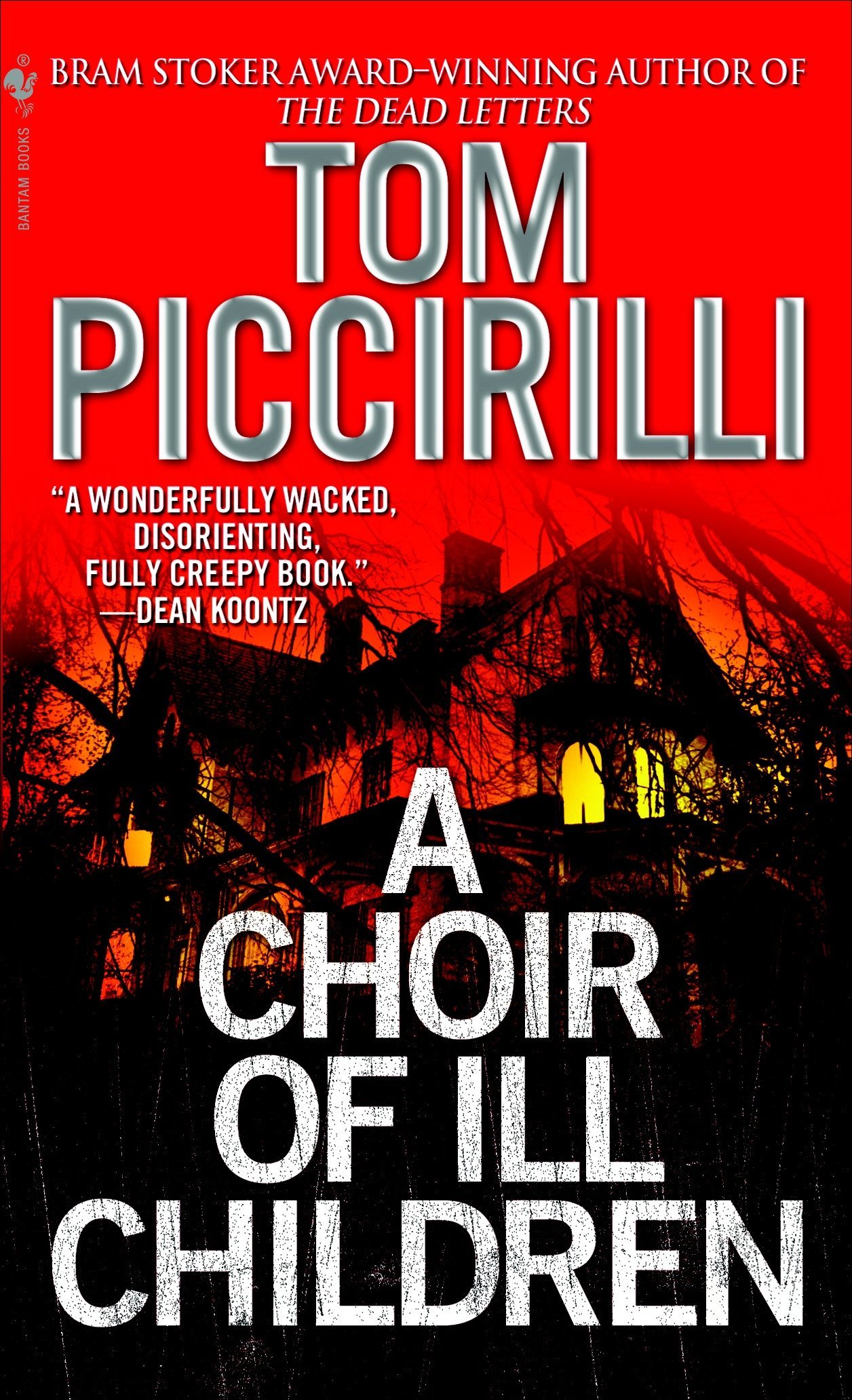
The titular phrase “a choir of ill children” is used four or five times throughout the late Tom Piccirilli’s haunting Southern Gothic, first in reference to the off-kilter musicality of protagonist Thomas’ three brothers (conjoined at the head) speaking in unison. Thomas, the heir of Kingdom Come’s most prosperous family line, enjoys an equal mix of fear and respect in town, from the granny witches in the swamps to the compulsively nude preacher’s son to the sheriff nursing a mighty Napoleon complex. If that sounds comedic, that’s because there is a perverted sense of dark humor punctuating the novel’s scenes of shocking violence and grotesquery. Like the great Michael McDowell and Karen Russell, Piccirilli mines his southern setting for the full range of the region’s complicated, messy magic.
—Steve Foxe
23. Something Wicked This Way Comes by Ray Bradbury (1962)
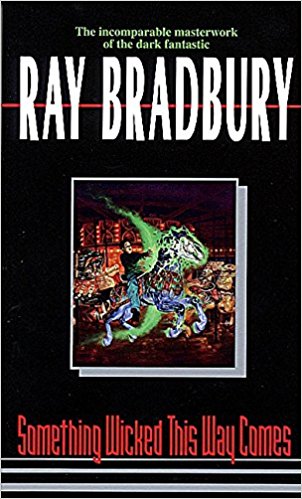
Were this list inclusive of short story collections, Ray Bradbury’s The October Country would be a serious contender for the top spot. Something Wicked This Way Comes doesn’t rank quite as high, but still embodies what makes Bradbury so influential in the world of the dark fantastic. It’s hard to imagine Neil Gaiman or Stephen King having their current careers had Bradbury not paved the way with his deeply human, quietly terrifying brand of horror, and Something Wicked, like so many of King and Gaiman’s best-loved works, also deals in that particular childhood fear of growing older and away from youthful innocence. A traveling carnival brings tempting delights and sinister frights, and readers young and old should find this one to be a timeless autumnal classic.
—Steve Foxe
24. The Terror by Dan Simmons (2007)

From Song of Kali and Carrion Comfort to a host of sci-fi classics, Dan Simmons is no stranger to lengthy literary outings. The last decade or so found the author hitting his stride with immersive historical horror fiction, the best of which is the story of the HMS Terror’s failed search for the Northwest Passage. While most of the horrors awaiting the ship’s crew are all-too-real—shrinking rations, scurvy, bitter cold—there’s a looming supernatural presence driving the survivors farther from civilization and any hope of rescue. Don’t wimp out of reading this in favor of the AMC television series—Simmons is a long-time genre master finding new ways to reinvent himself each decade.
—Steve Foxe
23. American Psycho by Bret Easton Ellis (1991)

It’s hard to downplay the horrors that hide inside Bret Easton Ellis’ American Psycho. Ellis received hate mail, death threats and became the subject of immense criticism after serial killer Paul Bernardo was found with a copy of the book. And it’s understandable why the book was a bit, uh, shocking in the ‘90s. Ellis’ twisted satire of upper-class living played out much like Less Than Zero, another tale of hyper-wealthy individuals searching aimlessly for something in a world where everything was handed to them. In Patrick Bateman’s case, a Wall Street yuppie finds murder as his escape. He tortures a homeless man. Breaks a dog’s legs. At one point, he gets his hands on a chainsaw. For some, it may seem like senseless violence for nothing—but the whole tale is a deep delve into Ellis’ own alienation and madness in the late ‘80s. And years later, it’s also a pretty good satire that looks toward the one percent.
—Tyler Kane
22. The Silence of the Lambs by Thomas Harris (1988)

It’s a little odd getting around The Silence of the Lambs’ third-person present tense: “Starling looks down the corridor,” etc., but once you get used to it, it’s a device that ends up perfectly suiting the novel. The narrator’s impartial voice floats above the proceedings, never siding with one character or settling exclusively onto their perspective—at times, the third-person narration gives us glimpses into the minds of Clarice Starling, Hannibal Lecter and Buffalo Bill. What the novel also does particularly well is make us probe into the motivations and ambition of Starling, going beyond her desire to simply help people and catch a killer. Opposed at nearly every turn by the institutional roadblocks erected in the path of female FBI trainees, the reader can sense the desperation of Starling and her borderline selfish desire to stand out and prove herself to her entirely male superiors. You can also sense this is part of the reason that Lecter takes an interest in her, finding her ambitions an interesting character trait that he can use to wrap Starling around his finger. This is actually one of the cases where it’s helpful to have seen the film in advance, because you can read Lecter’s dialogue and imagine it being delivered by Sir Anthony Hopkins. That’s a damn good combination to make for a compelling reading experience.
—Jim Vorel
21. Pet Sematary by Stephen King (1983)
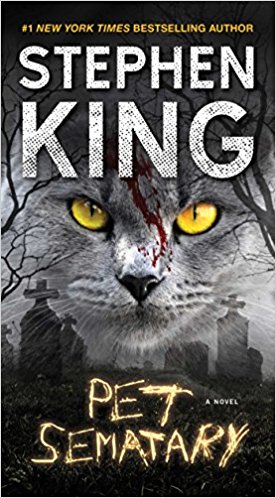
By the time Pet Sematary was published in 1983, a mythology had grown around it. Rumors among King’s fans suggested that the book was too frightening to publish, the sort of death-saturated manuscript you had to read wearing rubber gloves. There was some truth to this. When a cat belonging to his daughter was killed on the busy truck route in front of his house, King wondered: what would happen if he buried the cat, and three days later it came back, somewhat altered? And what if a child were killed, too, then came back changed (and not for the better)? In the novel, doctor Louis Creed takes a job at the University of Maine Infirmary and moves his wife, daughter and two-year-old son Gage into a house by a busy interstate. The highway soon consumes his daughter’s cat and later his son. But the permanency of death is a hard lesson for a parent to learn, and when Creed interferes with the natural order, fate slams him tenfold with retribution. King once wrote that horror writers are afraid to open the door all the way and show the monster’s face. In Pet Sematary King swings it wide. Beyond? The darkness and the dim shape of Oz, the great and terrible, awaits.
—William Gay


Comments
Post a Comment